For years, HR was viewed as a reliable service function—essential, but often sidelined when it came to big decisions about business strategy and technology investments. That era is quickly ending.. As organizations grapple with workforce shortages, AI adoption, and rapidly shifting market conditions, HR leaders are being asked to play a more strategic role. But what does that look like in practice?
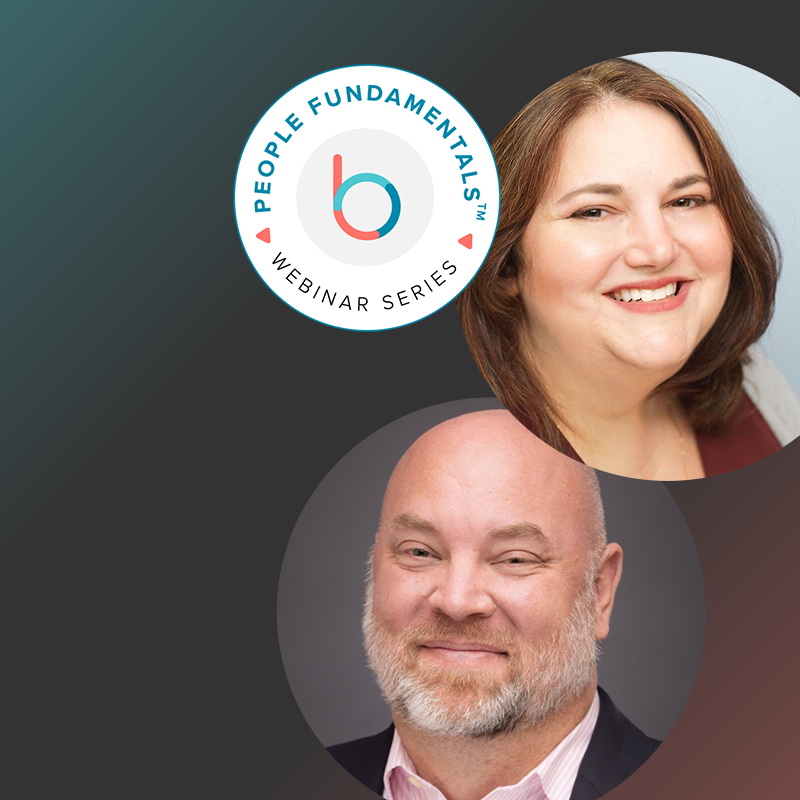
In the upcoming People Fundamentals webinar, The State of HR Technology and the AI Imperative, Stacey Harris, chief research officer and managing partner at Sapient Insights Group, and Cliff Stevenson, director of research & principal analyst at Sapient Insights Group, will reveal new findings from the 2024–2025 Sapient Insights HR Systems Survey. Their research highlights how AI is transforming HR technology, why HR must lead with flexible, scenario-based planning, and how the most effective leaders are collaborating with IT and finance to make smarter tech decisions.
AI is here — and HR must lead
AI is already transforming HR, particularly in performance and talent management systems. But Stacey warns that focusing solely on efficiency is short-sighted. “If all I’m doing in HR is efficiency conversations, I’m going to lose that because now I don’t care as much about engaging the employees.”
This shift is happening fast. Cliff noted that while AI use in North America is still growing, EMEA and APAC markets have surged ahead. Two-thirds of U.S. companies either don’t have guidelines or don’t know of any, while Europe and Asia have a high level of awareness about guidelines. Stacey and Cliff suggest practical frameworks to help HR teams take action. One of the most popular among leaders is a simple budgeting model: Dedicate 10% of your HR tech budget to innovation. “It doesn’t feel like it’s that groundbreaking. But most people don’t think about their budgets this way for HR tech,” Stacey says. “It gives them a concrete thing that they can do.”
Planning for an unknown future requires a prepared workforce
AI and automation are advancing too quickly for static strategies. Stacey emphasized the need for scenario planning and quarterly reviews to align HR tech strategies with business realities. “Now you have to think about where your company might be and which of those roads or paths are going to be more impacted by AI than not.”
This approach shifts the focus from chasing tools to preparing the workforce. The nature of work itself is rapidly changing. Stacey noted that while some organizations invest in AI to gain short-term efficiencies, they’re not always investing in the people needed to sustain long-term transformation. “They’re banking on the fact that they don’t need [those skills] now,” she says. “They’ll use AI to make enough money, and then they’re going to have enough money to buy the talent they want.”
But, to succeed in this environment, organizations need a workforce that is flexible, engaged, and willing to grow. “The only way I get there is to have an employee base that is so engaged and so ready that they’re willing to take leaps of faith and not worry about their job,” Stacey says.
The new power dynamic: HR, IT, and finance
The research from Sapient Insights Group also reveals a surprising gap in how HR perceives its own influence. While executives rate HR as highly strategic, HR leaders themselves don’t always agree, and neither do their peers in IT and finance.
Executives and CEOs see HR as a strategic lever, but HR doesn’t see itself in the same light. The problem is the way that IT and finance view HR’s role. They see AI as primarily a technology rollout rather than a workforce transformation. HR will need to get buy-in from CIOs and CFOs.
That means HR leaders need to show up differently. They must learn to speak the language of their cross-functional partners and clearly connect workforce strategy to business goals. “There’s no long-term incentive for most CEOs to think beyond the five years,” Stacey says. “HR has to be the mirror to make sure people know, if they’re doing this with AI, what the outcomes will be.”
Visibility into AI use is already shaping public perception. Cliff pointed to a recent example where a company promoted human connection as a differentiator with an ad advertising the organization as not using AI: “‘When you call, you’ll get a real person. No AI will be used to answer your questions.’” For HR leaders, this underscores the growing need to align technology strategy with workforce trust and external brand values.
HR’s opportunity is to bridge that divide—to use technology responsibly, advocate for the workforce, and guide the organization through change with clarity and confidence.
To hear more from Stacey and Cliff on how to navigate the future of HR technology and lead with confidence in the age of AI, register for the August 14, 2025 webinar.
Be a strategic HR tech leader